- Call on : (+021) 157 489
- Open Hours : Mon-Fri 08:00 - 15:00



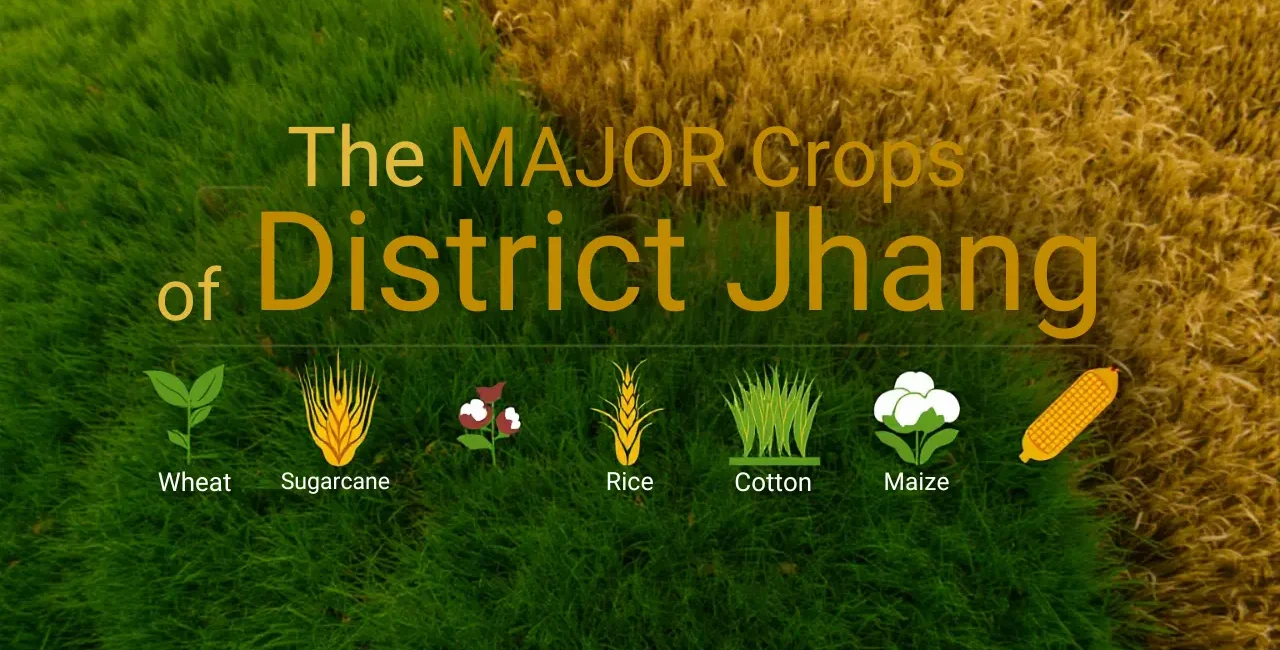
Cultivating Gold: The Major Crops of District Jhang
Cultivating Gold: The Major Crops of District Jhang
Welcome to the agricultural heartland of Punjab. If you stand on the banks of the Chenab River at sunrise, looking out over the endless green horizon, you aren’t just seeing fields; you are seeing the lifeline of Pakistan. District Jhang, historically known as the land of the Sials and Heer, is also a powerhouse of agrarian wealth.
At Discover Jhang, we believe that to know a city, you must know what sustains it. Today, we dig deep into the soil of our district to explore the major crops that feed our people, fuel our industries, and define our economy. From the golden waves of wheat to the sweet expanse of sugarcane, this is the story of farming in Jhang.
The Geography of Abundance: Why Jhang is Unique
Before diving into the crops, we must appreciate the land itself. Jhang sits at a geographic sweet spot—a “Doab” (land between two waters). The district is washed by the mighty Chenab and Jhelum rivers, which meet at the iconic Trimmu Barrage.
This geography divides our agricultural land into three distinct zones:
- Hithar: The riverine lowlands that receive natural irrigation from floods. This soil is rich, moist, and perfect for water-intensive crops.
- Utar: The intermediate plains where the majority of our settled farming happens, fed by a complex network of canals.
- The Bar & Thal: To the east lies the Sandal Bar and Kirana Bar, while the west touches the Thal Desert. These areas have their own unique agricultural character, now blooming due to modern tube wells and canal systems.
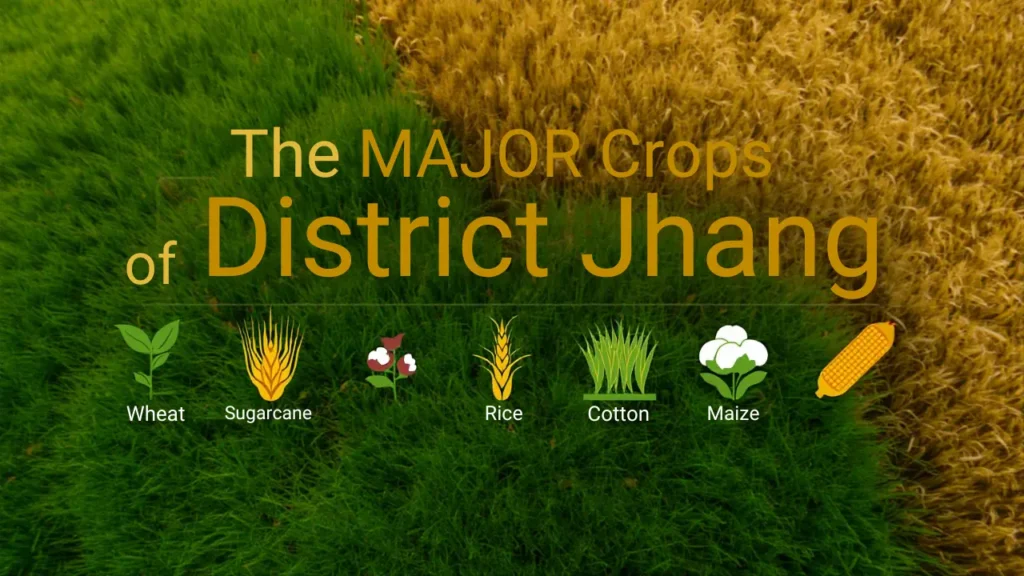
1. Wheat: The Golden Staple
Season: Rabi (Sown in Oct-Dec, Harvested in April-May)
Wheat (Gandum) is not just a crop in Jhang; it is a matter of survival and tradition. Covering the largest acreage in the district, wheat is the primary food source for our population.
- The Landscape: In April, the entire district turns into a sea of gold. The Utar areas produce some of the highest yields per acre in Punjab due to the loamy clay soil.
- Economic Impact: The harvest festival, Vaisakhi, marks the end of the wheat season. For the farmers of Jhang, the wheat harvest determines their financial stability for the entire year.
- Varieties: Farmers in Jhang are increasingly adopting disease-resistant varieties like Faisalabad-2008 and Galaxy-2013 to combat climate shifts.
2. Sugarcane: The Sweet Giant
Season: Kharif (Sown in Feb-March, Harvested in Nov-March)
If wheat is the king of food, Sugarcane (Ganna) is the king of cash. Over the last two decades, Jhang has emerged as a top sugarcane-producing district in Pakistan.
- Why Jhang? Sugarcane is a thirsty crop, and the sub-soil water along the Chenab belt makes Jhang an ideal host.
- A Shift in Trends: Many farmers have switched from cotton to sugarcane because it is more resilient to floods—a frequent occurrence in the Hithar belts of Jhang.
- The Industrial Link: The economy of Jhang is heavily tied to this crop due to the presence of major sugar mills, including Shakarganj Mills, Hunza Sugar Mills, and Ramzan Sugar Mills. These giants not only process the cane but also produce ethanol and bio-fuel, creating thousands of jobs.
3. Rice: The Gift of the Rivers
Season: Kharif (Sown in May-June, Harvested in Oct-Nov)
Rice (Chawal) cultivation in Jhang has seen a massive boom. While the Kalar Kahar region is famous for salt, the river banks of Jhang are famous for aromatic Basmati.
- Basmati & Kainat: The district grows high-quality Basmati rice, which is exported globally. Recently, the Kainat variety has gained popularity among local farmers for its long grain and high yield.
- The Water Factor: Rice paddies thrive in the water-logged areas near the Head Trimmu and Shorkot regions, utilizing the natural moisture of the river basin.
4. Maize: The Rising Star
Season: Spring & Autumn (Dual season crop)
Maize (Makai) is rapidly becoming a favorite for the progressive farmers of Discover Jhang.
- Food & Fodder: Jhang has a massive livestock population (buffaloes and cows). Maize is crucial not just for its grain, but for making Silage (fermented fodder), which is essential for milk production.
- Industrial Use: With the rise of poultry feed mills and corn-processing industries in nearby Faisalabad, the demand for Jhang’s maize has skyrocketed. It is a short-duration crop, allowing farmers to squeeze it in between major seasons.
5. The Lost Heritage: Cotton
Once, Jhang was a “White Gold” district. Cotton was the primary cash crop. However, due to changing weather patterns, pest attacks (like the Pink Bollworm), and the higher profitability of sugarcane, cotton cultivation has declined significantly. While it is still grown in the drier parts of the district (closer to the Thal desert), it has ceded its throne to sugarcane and maize.
Beyond the Staples: Jhang’s Hidden Agricultural Gems
At Discover Jhang, we want to highlight not just what is grown, but what can be grown. Our district is diversifying.
Citrus (Kinnow)
While Sargodha is the “City of Eagles and Kinnows,” Jhang is not far behind. The tehsils bordering Toba Tek Singh and Sargodha are home to lush orchards of Kinnow and Malta. The sandy-loam soil of the Kirana Bar is perfect for citrus, producing fruit that is juicy, tangy, and export-quality.
Medicinal Herbs & Spices
A lesser-known fact is that farmers in the Ahmedpur Sial and Garh Maharaja areas are experimenting with high-value medicinal crops.
- Fennel (Saunf) & Cumin (Zeera): These spices require less water and offer high returns. They are becoming the new “smart crops” for small landholders.
Vegetables & Dates
The Thal area of Jhang district contributes significantly to Date production. Meanwhile, the river belts produce truckloads of seasonal vegetables—Potatoes, Brinjals, and Tomatoes—that supply the markets of Lahore and Islamabad.
The Future of Farming in Jhang
Agriculture in Jhang is at a crossroads. While our land is fertile, we face modern challenges: water scarcity in the tail-end canals, climate change, and the need for mechanization.
Discover Jhang advocates for:
- Drip Irrigation: To save water in the sandy Thal regions.
- Tunnel Farming: To grow off-season vegetables for higher profits.
- Digital Awareness: Using platforms like ours to inform farmers about market rates and weather patterns.
Conclusion
The fields of Jhang are more than just dirt and crops; they are the canvas upon which the history of our district is painted. From the hardworking peasant in Shorkot to the orchard owner in 18-Hazari, every farmer contributes to the prosperity of Pakistan.
As we move forward, blending tradition with technology, the soil of Jhang promises to remain a goldmine. Whether you are an investor, a student, or a local citizen, take a moment to appreciate the harvest.
Stay connected with Discover Jhang—where we celebrate our roots to grow our future.
Last modified: January 4, 2026
When you click the button below WordPress will create an XML file for you to save to your computer.
This format, which we call WordPress eXtended RSS or WXR, will contain your posts, pages, comments, custom fields, categories, and tags.