- Call on : (+021) 157 489
- Open Hours : Mon-Fri 08:00 - 15:00



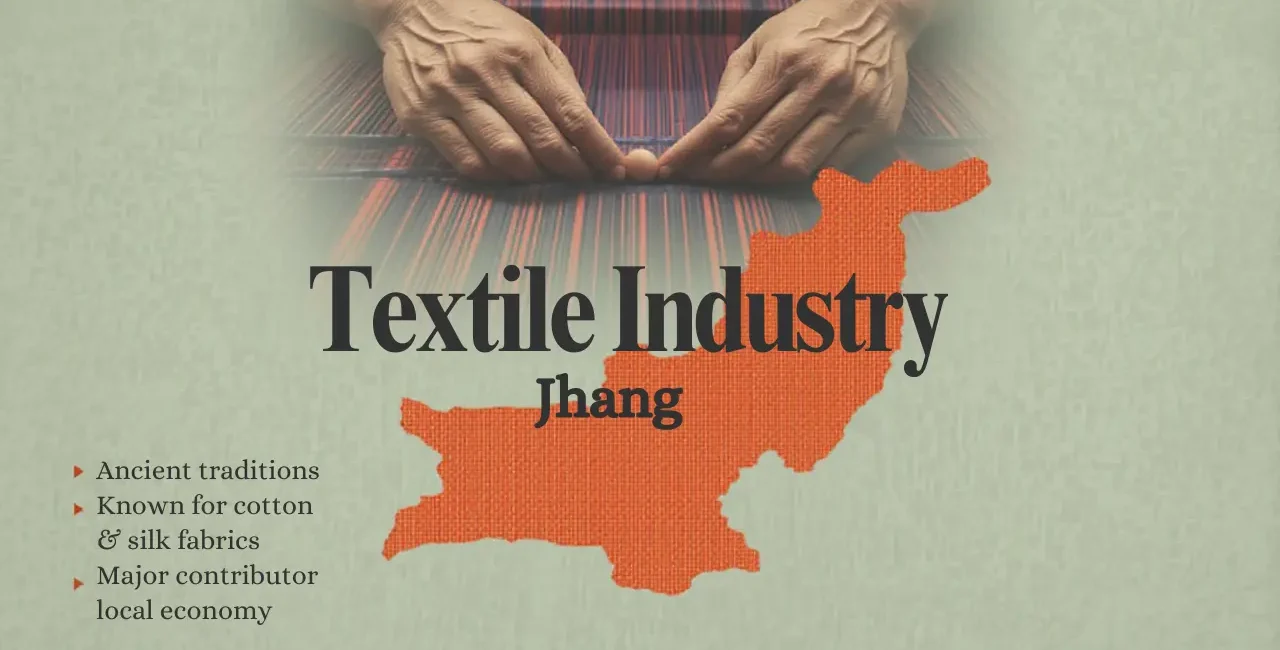
Threads of Tradition & Progress: The Textile Industry of Jhang
Threads of Tradition & Progress: The Textile Industry of Jhang
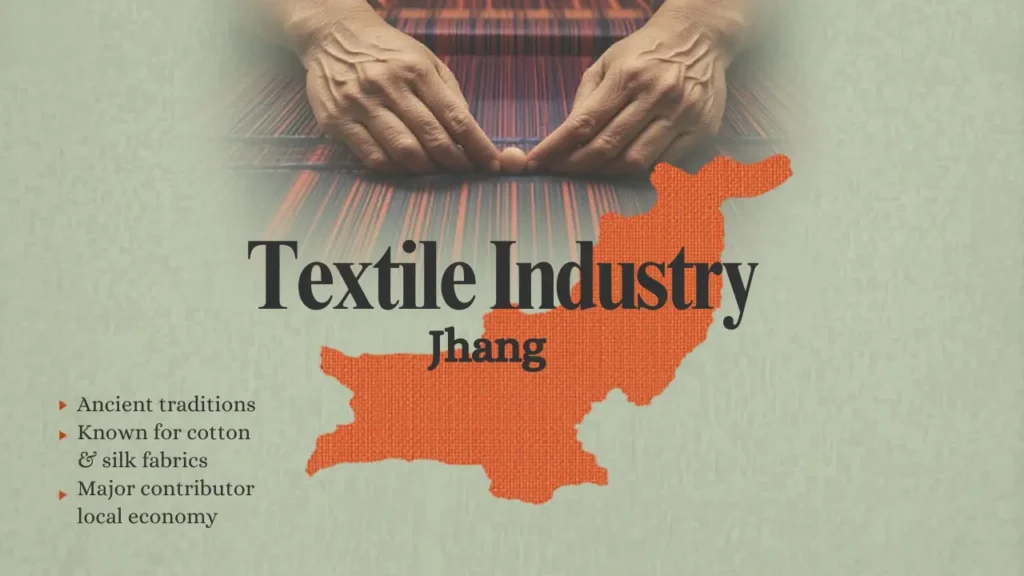
Welcome to Discover Jhang, the digital heartbeat of the land of Heer. When we think of Jhang, we often picture the golden wheat fields or the spiritual shrines that dot our landscape. But there is another story woven into the very fabric of our district—a story of cotton, craftsmanship, and industrial potential.
Today, Discover Jhang takes you inside the Textile Industry of Jhang. From the humble cotton bolls of the “Bar” to the rhythmic clatter of power looms and the intricate artistry of hand-woven Khes, we explore how Jhang contributes to Pakistan’s status as a textile giant.
The Foundation: Jhang as the “White Gold” Belt
To understand the textile industry here, you must first look at the soil. Jhang is situated in the heart of Punjab’s cotton belt. The fertile lands between the Chenab and Jhelum rivers are ideal for growing Cotton, often referred to as “White Gold.”
For centuries, the farmers of Jhang have produced high-quality raw cotton, which serves as the backbone of the national textile sector. Unlike cities that only process imported materials, Jhang is a source city.
- Ginning Factories: The industrial journey begins here. Jhang is home to numerous cotton ginning and pressing factories (such as those on the Jhang-Sargodha and Jhang-Bhakkar roads). These units separate the cotton fiber from the seed, preparing the lint that fuels spinning mills across Pakistan.
- Strategic Advantage: Being a producer of raw material gives Jhang a logistical advantage—lowering transportation costs for local textile units compared to those in non-agricultural districts.
The Cottage Industry: A Legacy of Handlooms
Long before modern machinery arrived, the artisans of Jhang were weaving magic with their hands. At Discover Jhang, we believe this is the most unique aspect of our local industry—one that holds massive potential for cultural tourism and global export.
The Famous Jhangvi “Khes”
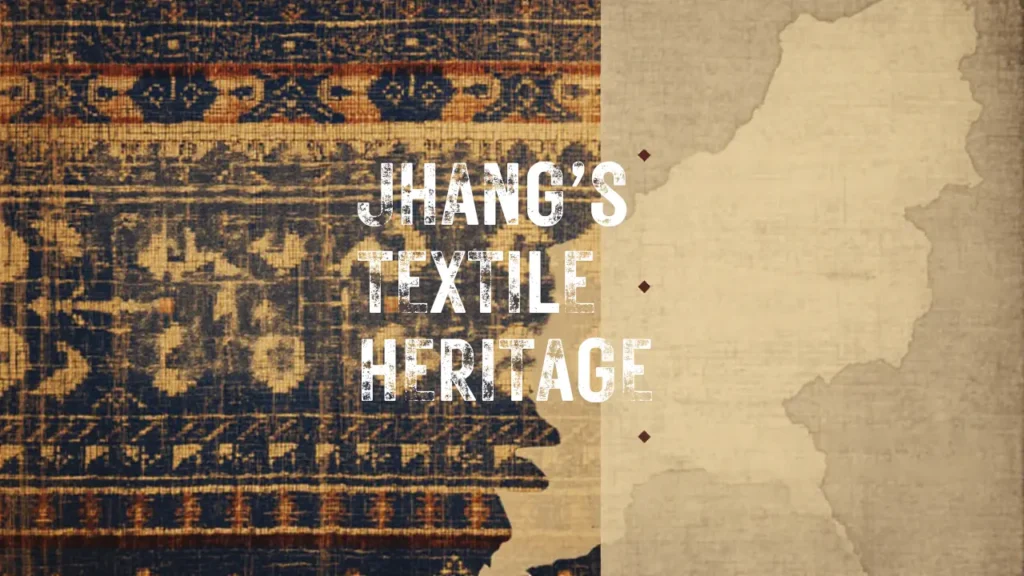
If Multan is famous for pottery, Jhang is famous for the Khes. This traditional heavy blanket is made from cotton or a cotton-silk blend. Jhangvi Khes is renowned for its:
- Geometric Patterns: Intricate square and diamond designs that require mathematical precision by the weaver.
- Durability: A good Khes lasts for decades, often passed down as an heirloom.
- Cultural Significance: No wedding in rural Jhang is complete without a Khes in the bride’s dowry.
Carpet and Rug Weaving (Darr)
The rural areas of Jhang, particularly towards the Thal desert, have a rich tradition of wool weaving. Utilizing wool from local livestock, artisans create Darr (rugged floor mats) and hand-knotted carpets. These are sustainable, organic, and highly sought after by lovers of authentic craft.
Discover Jhang Insight: The global market is currently obsessed with “sustainable” and “handmade” textiles. Jhang’s cottage industry is perfectly positioned to tap into this trend if connected with digital marketplaces.
The Modern Shift: Power Looms and Processing
While heritage is important, economic growth requires scale. Over the last few decades, Jhang has seen a shift from handlooms to Power Looms.
While Faisalabad (our neighbor) is the “Manchester of Pakistan,” Jhang plays a crucial supporting role in this ecosystem.
- Grey Cloth Production: Thousands of small-to-medium power loom units operate in the district, particularly in the suburbs and tehsils like Shorkot and Ahmedpur Sial. They produce “grey cloth” (unprocessed fabric) which is then sent to Faisalabad or Karachi for dyeing and printing.
- Spinning Units: Several large spinning mills have been established in and around the district boundaries, utilizing local cotton to produce high-count yarn.
- Apparel and Garments: This is the new frontier. Companies like Uniform House in Jhang have shown that export-quality garments can be manufactured right here. By moving from simple weaving to stitching and packaging, Jhang is slowly entering the “Value Added” sector.
Economic Impact and Employment
The textile sector is the second-largest employer in Jhang after agriculture.
- Rural Livelihoods: For many families, a loom in the backyard is a source of secondary income. Women play a vital role here, particularly in yarn preparation and hand-embroidery.
- Urban Employment: The ginning factories and power loom clusters provide thousands of jobs to laborers, mechanics, and transport workers.
Challenges Facing the Industry
At Discover Jhang, we believe in an honest analysis. Despite its potential, the industry faces hurdles:
- Energy Crisis: Like much of Pakistan, high electricity tariffs hit the small power loom owners hard.
- Technology Gap: Most local units use obsolete machinery. Upgrading to modern shuttle-less looms is expensive but necessary for quality.
- Lack of Finishing Units: Jhang produces the cotton and the cloth, but we lack the large-scale dyeing and finishing plants. This means the “value addition” (and the profit) often goes to other cities.
Investment Opportunities: Why Invest in Jhang?
For investors reading this on Discover Jhang, the city offers untapped potential:
- Cheaper Land & Labor: Compared to the saturated industrial estates of Faisalabad or Lahore, operational costs in Jhang are significantly lower.
- Raw Material Proximity: You are sitting right next to the cotton fields.
- Solar Potential: Jhang’s geography offers high solar irradiance, making it ideal for solar-powered textile units to offset energy costs.
The Role of Discover Jhang
Our platform, Discover Jhang, is committed to bridging the gap between our artisans and the world. We aim to:
- Profile Local Artisans: Giving a face and voice to the master weavers of Khes and carpets.
- Connect Buyers: Serving as an information hub for investors looking for textile suppliers in Jhang.
- Digitize Heritage: Documenting the unique patterns and techniques of Jhangvi weaving before they are lost to time.
Conclusion
The textile industry of Jhang is a sleeping giant. It stands on a strong foundation of agricultural wealth and centuries-old craftsmanship. From the cotton picker in the fields to the weaver at his loom, millions of hands are working to dress the nation.
With the right investment, technological upgrades, and the digital spotlight provided by platforms like Discover Jhang, our city can transform from a raw material supplier into a global hub of ethical and traditional textiles.
Jhang is spinning a new future. Be part of the pattern.
Last modified: January 4, 2026