discoverjhang.com

A brief history of JHANG

For thousands of years, the fertile river terrace along the Chenab has been a cradle of civilization, witnessing the march of Alexander the Great long before becoming the heart of the Sial dynasty.

1288

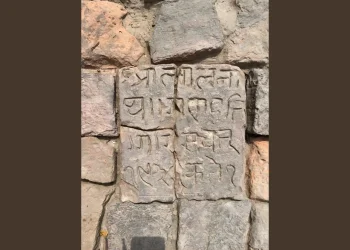
In 1288, the historical city of Jhang was founded by Rai Sial, a chieftain of the Sial tribe, on the advice of the Sufi saint Hazrat Shah Jalal Bukhari. This marked the first permanent settlement of the Sials in the Chenab Valley, laying the spiritual and cultural foundations for what would become a powerful regional state.

1462

By 1462, the Sial chieftaincy had solidified into a formal state under Mal Khan, the first official ruler of Jhang. He established the city as a sovereign power, and his dynasty would go on to rule the region for nearly 360 years. This era fostered a unique culture deeply rooted in the folklore of Heer Ranjha, whose tragic romance is immortalized in the region’s history.

1818

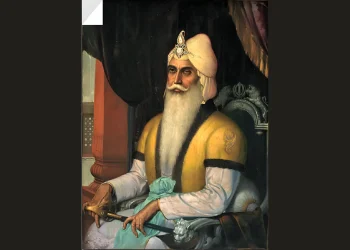
The centuries of independent Sial rule ended in 1818 when the Sikh Empire, under Maharaja Ranjit Singh, captured the city. The last Sial ruler, Ahmad Khan, was defeated, and Jhang remained under Sikh administration until the British annexed the Punjab in 1849. This transition marked the end of feudal autonomy and the beginning of colonial governance.

1867

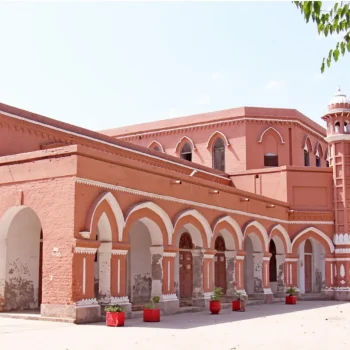
Under British rule, the neighboring towns of Jhang and Maghiana were merged in 1867 to form the Jhang-Maghiana Municipality. This administrative union transformed the area into a bustling trade hub for wool, soap, and grain. The city flourished as a joint unit, although it later lost significant territory when Lyallpur (now Faisalabad) was carved out as a separate district in 1904.

1947

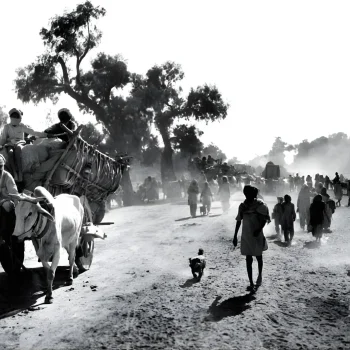
The partition of the subcontinent in 1947 brought profound demographic changes to Jhang. As a district near the new border, it saw the mass migration of its Hindu and Sikh communities to India and the arrival of thousands of Muslim refugees. The city rebuilt its social fabric, emerging as a vital center of agriculture and Sufi heritage in the new state of Pakistan.

2009 - Present

In the modern era, Jhang’s administrative boundaries shifted once again. In 2009, the tehsil of Chiniot was separated to form its own district, reducing Jhang’s size but refining its focus. Today, Jhang remains an agricultural powerhouse, famous for the shrines of Sultan Bahu and Heer Ranjha, and continues to modernize its infrastructure to serve its growing population.


Untitled design (82)
Untitled design (84)
Untitled design (83)
Untitled design (87)
Untitled design (85)