- Call on : (+021) 157 489
- Open Hours : Mon-Fri 08:00 - 15:00



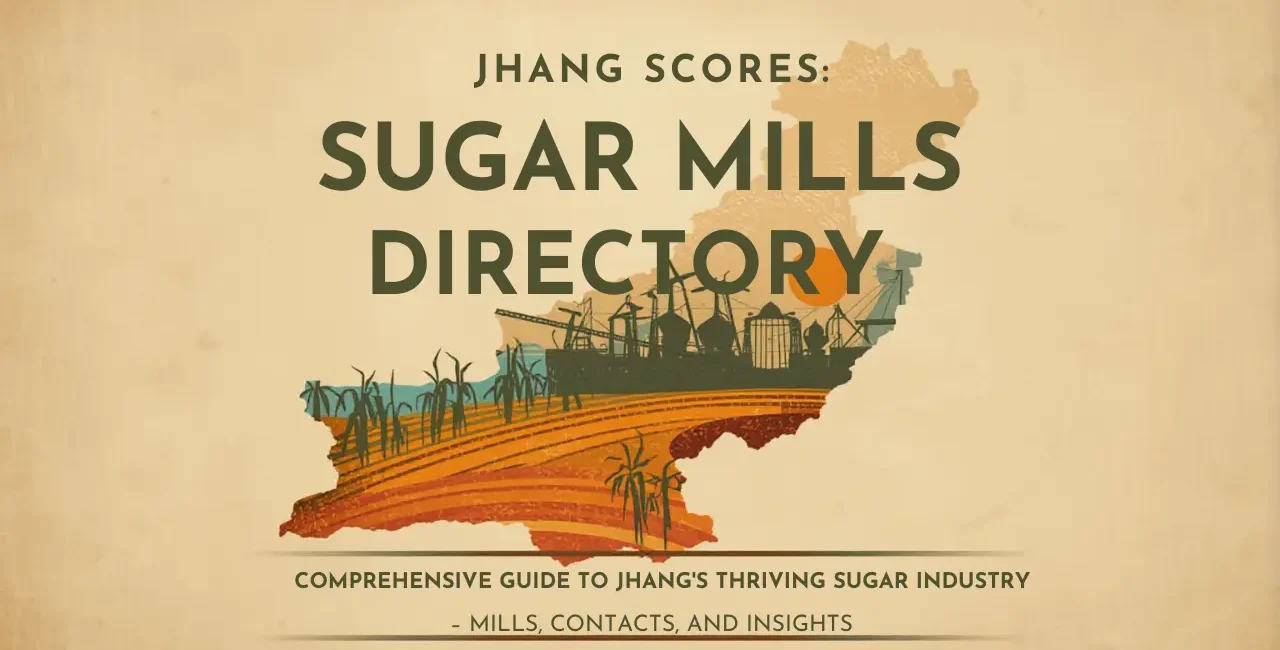
The Complete Sugar Mills Directory of Jhang
The Complete Sugar Mills Directory of Jhang: The Sweet Engine of Our Economy
Welcome to Discover Jhang, the digital heartbeat of our district.
When you drive through the rural expanses of Jhang, especially during the winter months, one sight is ubiquitous: tractor-trolleys loaded high with sugarcane, queuing up for miles. This isn’t just traffic; it is the lifeblood of Jhang’s economy. Jhang is not only the land of Heer and spirituality; it is an industrial powerhouse for Pakistan’s sugar sector.
For investors, farmers, job seekers, and researchers, understanding the sugar industry here is crucial. In this comprehensive guide, Discover Jhang presents the Sugar Mills Directory of Jhang, diving deep into the giants that turn our green fields into white gold.
Why Jhang is the “Sugar Bowl” of Punjab
Before we list the mills, we must understand the why. Jhang is situated between the Chenab and Jhelum rivers. This unique geography provides the fertile, sandy-loam soil and the abundant water supply required for high-yield sugarcane cultivation.
The sugar industry in Jhang is more than just factories; it is an ecosystem. It supports:
- Thousands of Farmers: Who rely on sugarcane as their primary cash crop.
- Transport Sector: From trucks to tractor-trolleys, the logistics of cane movement drives local transport businesses.
- By-Product Industries: Producing ethanol, chipboard, and bio-fertilizers.
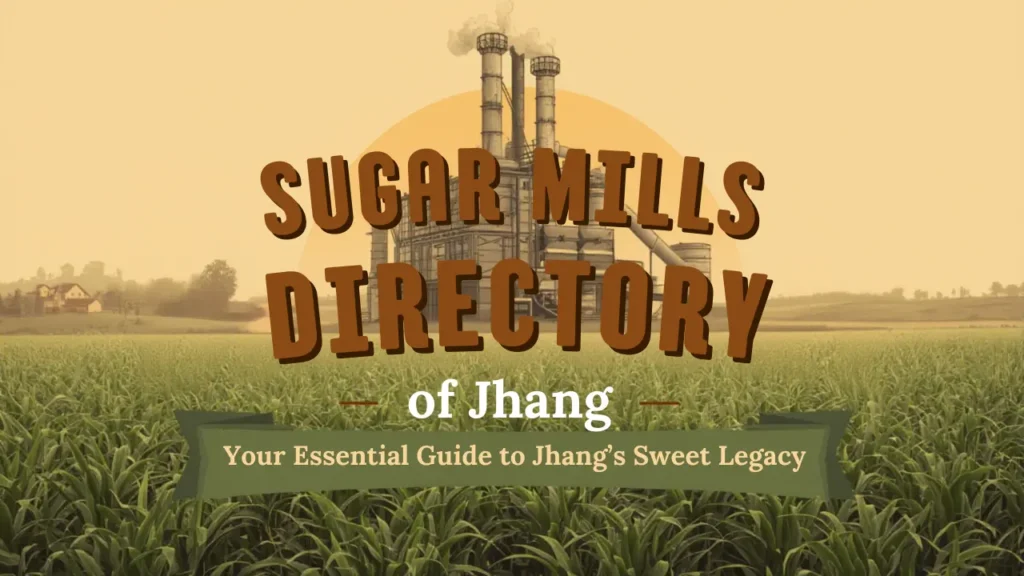
Sugar Mills Directory of Jhang
Here is the detailed profile of the major sugar mills operating within the district of Jhang.
1. Shakarganj Mills Limited (SML)
The Industrial Giant
Shakarganj is arguably the most recognizable name in Jhang’s industrial landscape. Established in 1967, it has evolved from a simple sugar mill into a complex conglomerate. It is a pioneer in sustainable farming and by-product utilization.
- Locations:
- Unit I: Jhang-Toba Road (The main campus).
- Unit II: Bhone, Jhang (A satellite facility to handle excess capacity).
- Key Features:
- Production Capacity: Shakarganj has a massive crushing capacity (over 12,000 Tons of Cane Per Day – TCD), making it one of the largest in the country.
- Diversification: Unlike traditional mills, Shakarganj produces biofuel (ethanol) and has a significant dairy division (Good Milk), which also sources from Jhang’s livestock farmers.
- Shakarganj Sugar Research Institute (SSRI): Located in Jhang, this is a state-of-the-art research center that develops new, disease-resistant sugarcane varieties for local farmers.
- Why it Matters: For job seekers and farmers, Shakarganj is the top tier. Their payment systems and corporate structure are often cited as industry benchmarks.
2. Hunza Sugar Mills
The Modern Powerhouse
Part of the dynamic Hunza Group, this mill represents the modern face of industrial Jhang. Located strategically in the 18-Hazari tehsil, it caters to the farmers of the “Thal” area and the western side of the Chenab.
- Location: 18-Hazari, Layyah Road, Jhang.
- Key Features:
- Technology: Hunza Sugar Mills employs some of the most modern filtration and processing technologies, resulting in high-grade refined sugar.
- Energy Generation: They have invested in high-pressure cogeneration power plants. By burning bagasse (sugarcane waste), they generate electricity for their own operations and supply the surplus to the national grid.
- Export: Hunza is a key player in exporting ethanol and rectified spirits to Europe and Asia.
3. Kashmir Sugar Mills Limited (KSML)
The Shorkot Anchor
Located in the historic tehsil of Shorkot, Kashmir Sugar Mills is the economic anchor for the southern part of Jhang district.
- Location: Shorkot Cantonment, District Jhang.
- Key Features:
- Regional Importance: For farmers in Shorkot and bordering areas of Toba Tek Singh, KSML is the nearest and most viable option for selling cane.
- Community Impact: The mill has been instrumental in developing local roads and infrastructure in the Shorkot area to facilitate cane transport.
4. Haq Bahu Sugar Mills
The Rising Player
Named after the revered saint of Jhang, Hazrat Sultan Bahu, this mill is a testament to local entrepreneurship.
- Location: Layyah Road, Jhang.
- Key Features:
- Focus: While smaller than Shakarganj, Haq Bahu Sugar Mills focuses on efficiency and strong relationships with local growers.
- Market Presence: They are known for their distinct white sugar quality available in local wholesale markets.
5. Safina Sugar Mills
The Supporting Pillar
Located in the Lalian/Chiniot border region (historically part of Jhang’s ecosystem), Safina Sugar Mills absorbs the cane supply from the northern agricultural belts of the district.
- Location: Pharianwali, District Jhang/Chiniot border.
- Key Features: Provides a vital alternative for farmers who wish to avoid the long queues at the central Jhang mills.
Economic Impact: Beyond Sweetness
At Discover Jhang, we believe in looking at the bigger picture. These mills don’t just make sugar; they fuel a circular economy.
1. Bio-Energy Production
Jhang is becoming a green energy hub. Mills like Hunza and Shakarganj use Bagasse (the fibrous residue of cane) to fire their boilers. This is renewable energy in action, reducing dependence on imported oil.
2. The Ethanol Boom
Molasses, a thick black by-product of sugar making, is fermented to create Ethanol. This is “Liquid Gold” for Pakistan’s exports. Jhang’s distilleries export millions of dollars worth of ethanol annually, contributing directly to the national foreign exchange reserves.
3. Bio-Fertilizers
The “Press Mud” (waste cake) from these mills is rich in organic matter. Smart farmers in Jhang use this as a high-grade natural fertilizer to reclaim saline land, closing the agricultural loop.
Guide for Farmers: How to Engage with Mills
If you are a farmer in Jhang, dealing with mills can be challenging. Here are some tips from Discover Jhang experts:
- Cane Procurement Receipt (CPR): Always ensure you receive a computerized CPR when you offload your trolley. This is your only legal proof for payment.
- Zone Systems: Mills often have designated “zones.” Ensure you are registered with the cane department of the mill closest to your land to avoid “out of zone” deductions.
- Variety Selection: Consult the cane development officers at Shakarganj or Hunza. Planting approved varieties (like CPF-243 or HSF-240) ensures higher weight and better recovery rates, which mills prefer.
The Challenges Ahead
While the industry is robust, it faces hurdles:
- Water Scarcity: Sugarcane is a thirsty crop. Our mills and farmers must adopt drip irrigation techniques to save the Chenab’s water.
- Payment Delays: This remains a historic issue. Stronger regulation is needed to ensure farmers are paid promptly to start the next sowing cycle.
- Environmental Concerns: Managing untreated wastewater (effluent) is critical. Discover Jhang advocates for all mills to install active water treatment plants to protect our rivers and groundwater.
Conclusion: The Sweet Future of Jhang
The sugar mills of Jhang are more than industrial units; they are partners in our city’s progress. As they modernize, they bring technology, energy, and employment to our doorstep.
For the people of Jhang, these chimneys smoking in the winter are a sign of activity and livelihood. At Discover Jhang, we will continue to monitor this sector, bringing you the latest updates on crushing seasons, support prices, and job opportunities.
Do you have a story about working in these mills? Or are you a farmer with tips to share? Let us know in the comments below!
For more insights into the business, culture, and history of our city, keep visiting Discover Jhang.
FAQs
Q: Which is the largest sugar mill in Jhang? A: Shakarganj Mills Limited (Unit I & II) is generally considered the largest in terms of capacity and diversification.
Q: Where is Hunza Sugar Mills located? A: Hunza Sugar Mills is located in 18-Hazari, on the Jhang-Layyah Road.
Q: Do these mills offer internships? A: Yes, mills like Shakarganj and Hunza often offer internships for engineering and agriculture students, particularly from colleges in Jhang and Faisalabad. Check their official websites or HR offices for seasonal openings.
Last modified: January 4, 2026